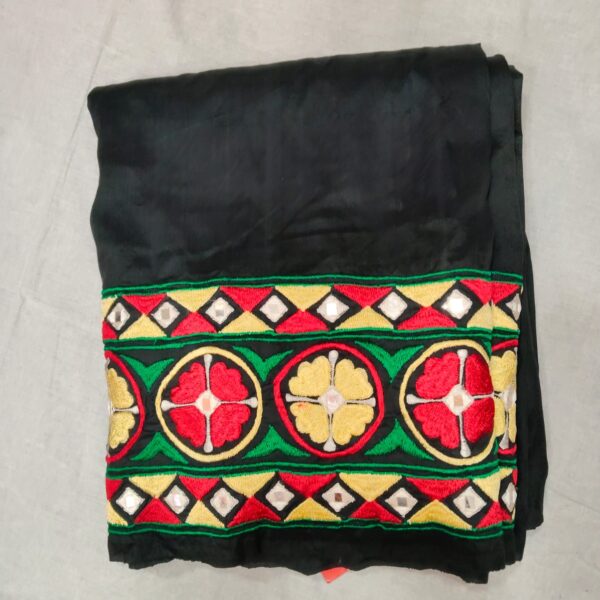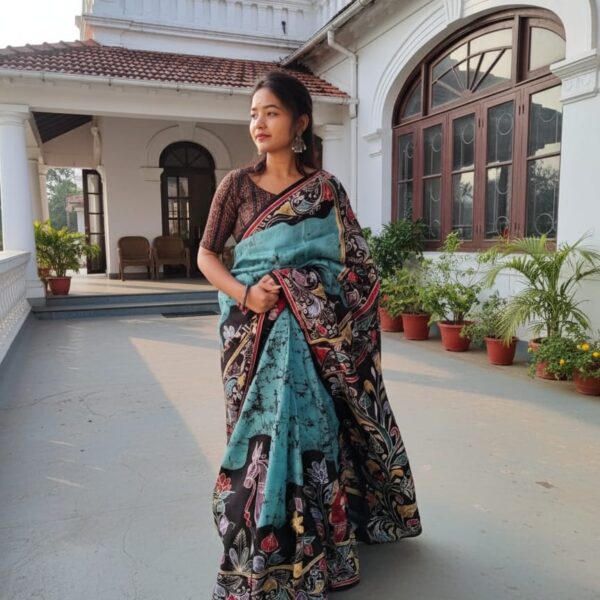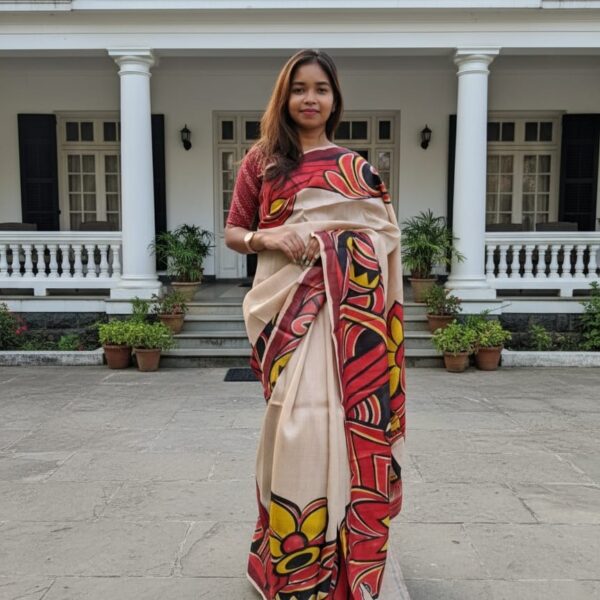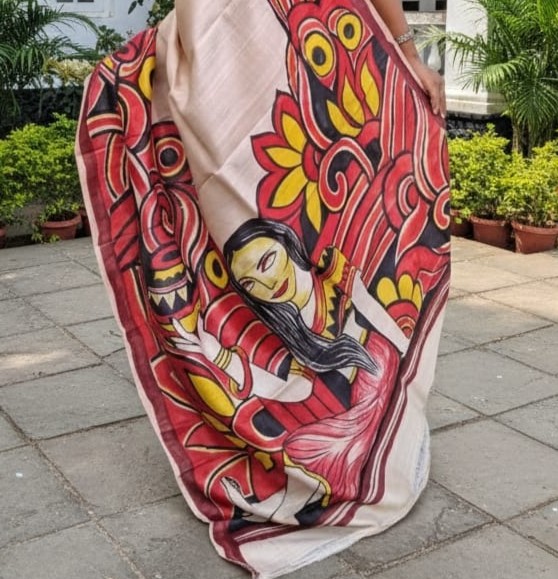

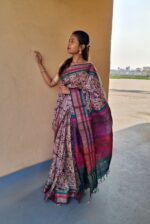

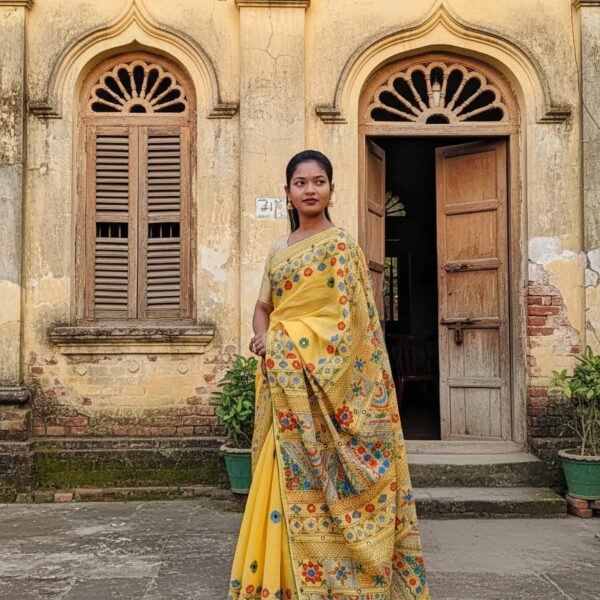
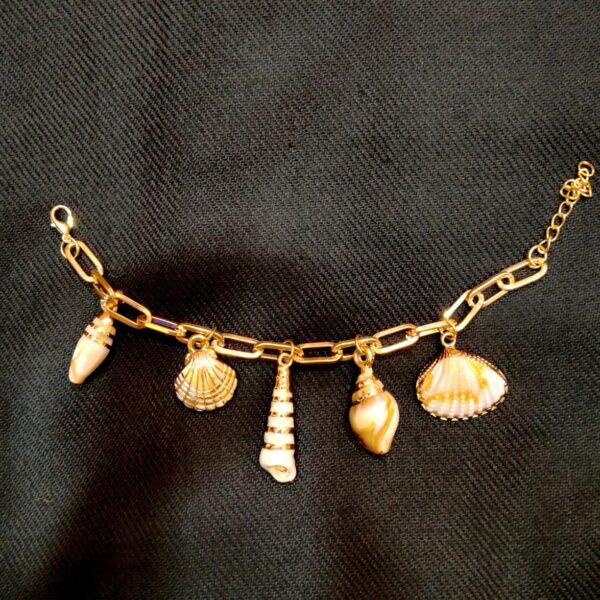
Hand Blocked Tussar Saree with Multicolour Pallu – Elegant Handcrafted Tussar Silk Saree for Festive & Cultural Wear

 6,500.00

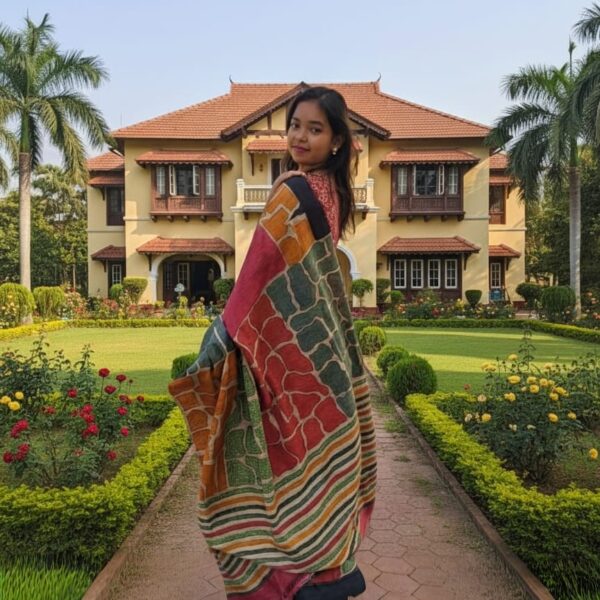
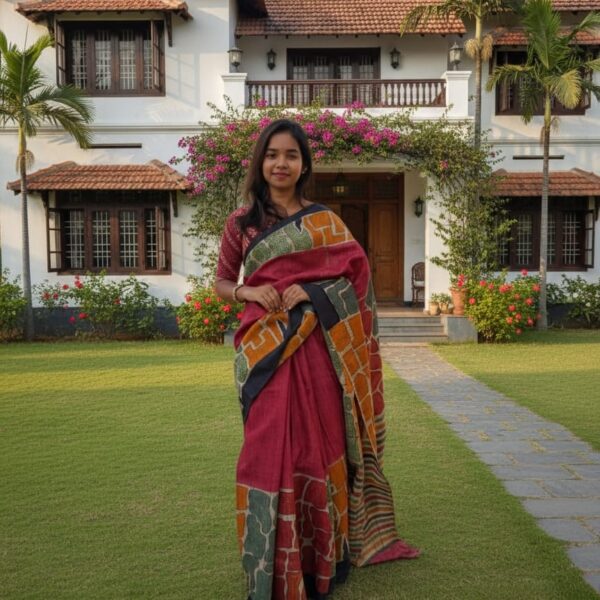
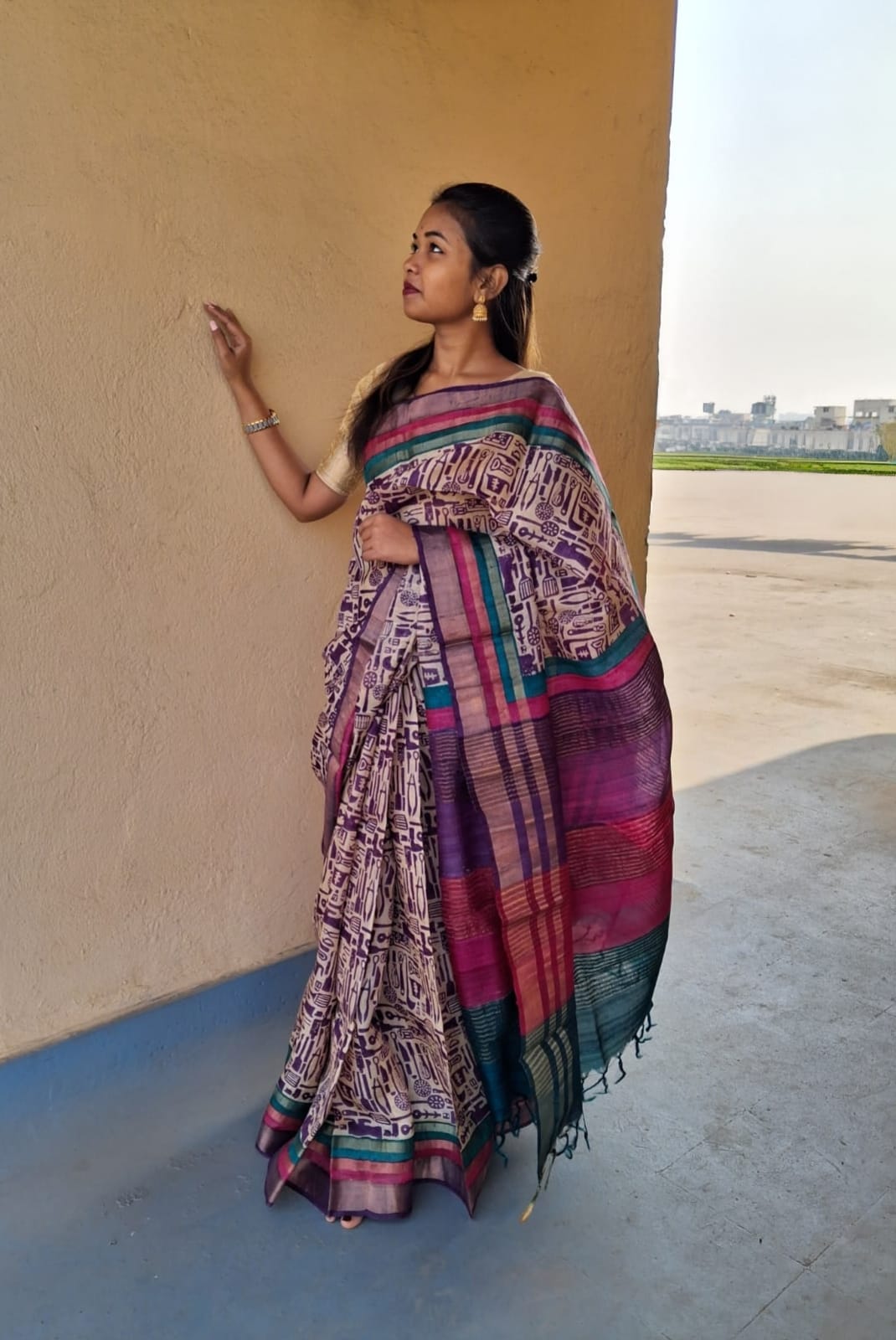
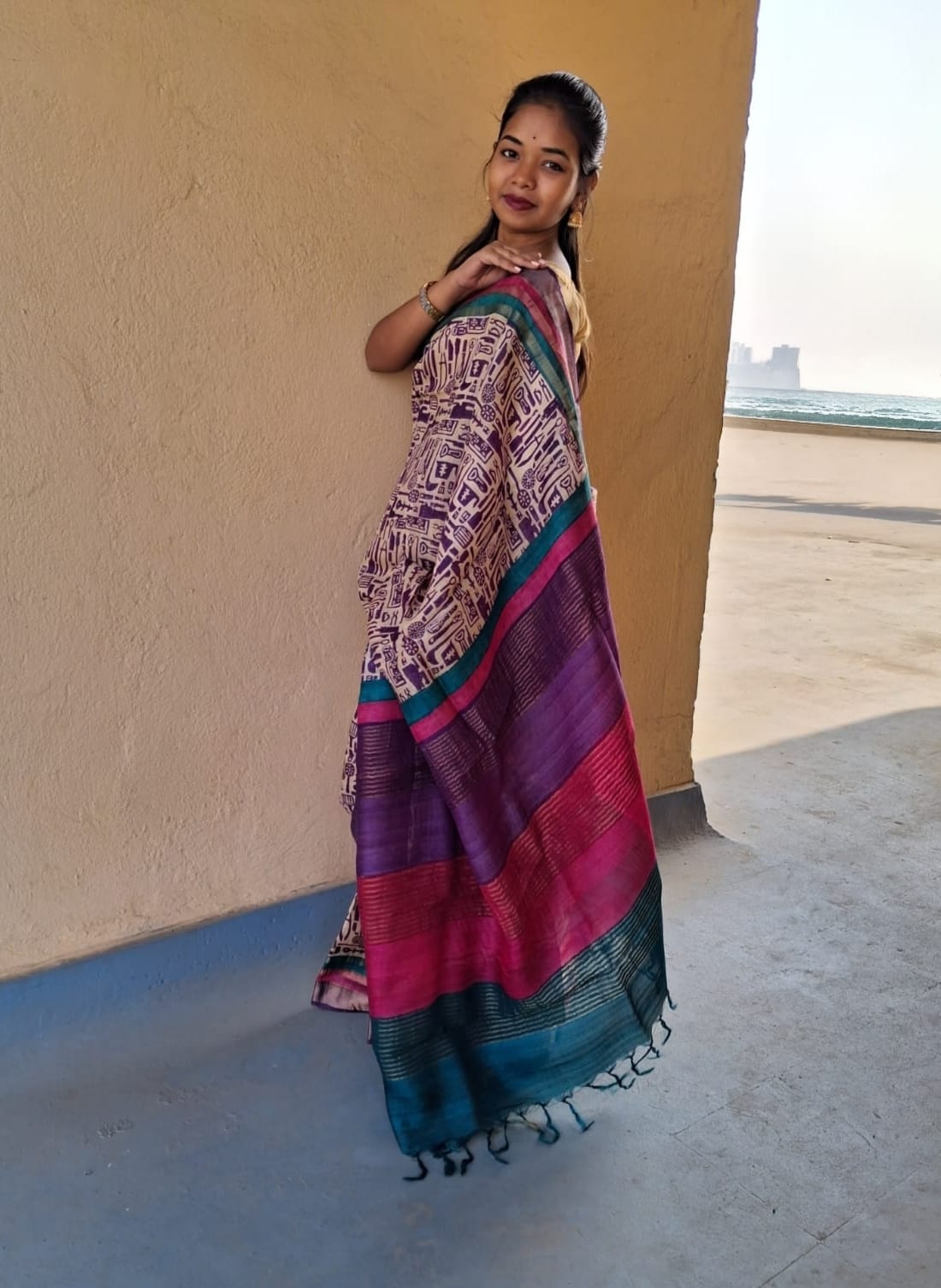
Add artisanal charm to your wardrobe with this Hand Blocked Tussar Saree, featuring a soft ivory base adorned with traditional block-printed motifs and a rich multicolour striped pallu in shades of purple, teal, and magenta. Elegant, breathable, and timeless.

Buy Now
Description

Description

Experience the beauty of handcrafted textiles with this exquisite Hand Blocked Tussar Saree, a perfect blend of natural texture and artistic expression. Crafted from authentic tussar silk, the saree showcases a subtle ivory base enhanced with intricate hand-blocked prints inspired by folk and geometric motifs.

The highlight of this saree is its striking pallu, woven with rich hues of purple, teal, and magenta in fine striped patterns, adding depth and contemporary contrast to the traditional design. The natural sheen and slightly coarse texture of tussar silk lend an understated elegance, making this saree ideal for cultural gatherings, festive occasions, exhibitions, and graceful day wear.

Each piece is individually handcrafted, ensuring uniqueness and celebrating the beauty of slow, sustainable fashion. Style it with minimal jewelry or handcrafted accessories for a refined, artistic look.

Fabric: Pure Tussar Silk
Technique: Hand Block Printing
Color: Ivory Base with Multicolour Pallu (Purple, Teal, Magenta)
Occasion: Festive Wear, Cultural Events, Day Functions, Handloom & Artisan Wear

Reviews (0)

Reviews

There are no reviews yet.

Be the first to review “Hand Blocked Tussar Saree with Multicolour Pallu – Elegant Handcrafted Tussar Silk Saree for Festive & Cultural Wear”

Your email address will not be published. Required fields are marked *

You have to be logged in to be able to add photos to your review.

Shipping & Delivery

Our Delivery Partner

FEDEX

SHIPPING AND DELIVERY CHARGES

  • Our standard charges for any product is INR 100. In case of bulk orders please request a quote from our team by filling up the form given in Contact page of the website. We will get back to you soon. Please mention in details about your query along with your Full Name, Phone Number and Email.

Recently Viewed Products

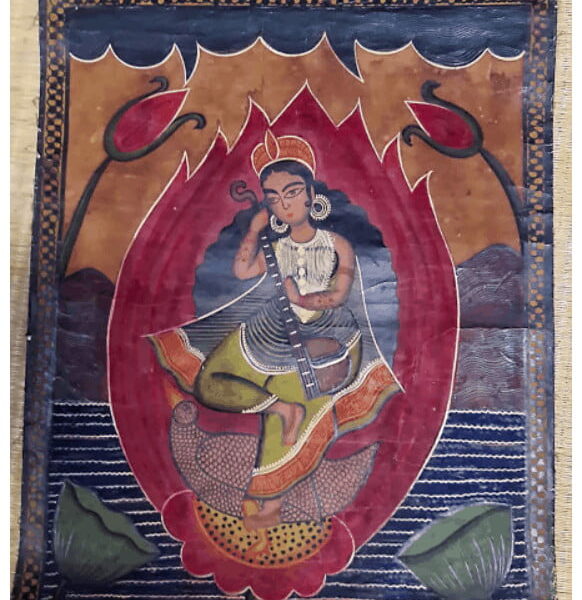
Saraswaati – Indian God

 4,500.00
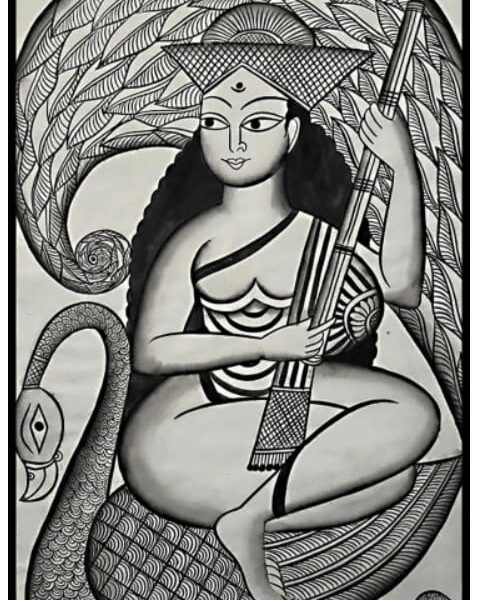
The Patachitra of Bengal has its unique style of using simple lines creating intricate details. The subjects are drawn mostly from Hindu mythology. The all natural colours are made from elements like leaves, soil, flowers and seeds. The choice and use of colours are also very unique and soothing to the eyes and the soul of the viewers. This painting comes from the brush of Rajesh Chitrakar. 

Babu Bibi

 4,500.00
Painted in black and white, the old Kolkata’s Babu and Bibi (man and wife) talks about a common pass time for the couples, chatting and smoking. The painting style is known as ‘Kalighat er Patachitra’ which connects to Kalighat, the famous pilgrimage in Kolkata, and depicts the city life. Rajesh Chitrakar, an artist of the new generation has learned and mastered the art so well. 

Bengal Handicraft. Wooden Toys. Pair of Owls

 80.00
Patachitra on Wood. Wooden Toys from Rural Bengal. Tribal art decoratives for your home. Gift to dear ones. Minimum purchase set of 5

Bengal Handicraft. Wooden Toys. Pair of Lord Ganesha.
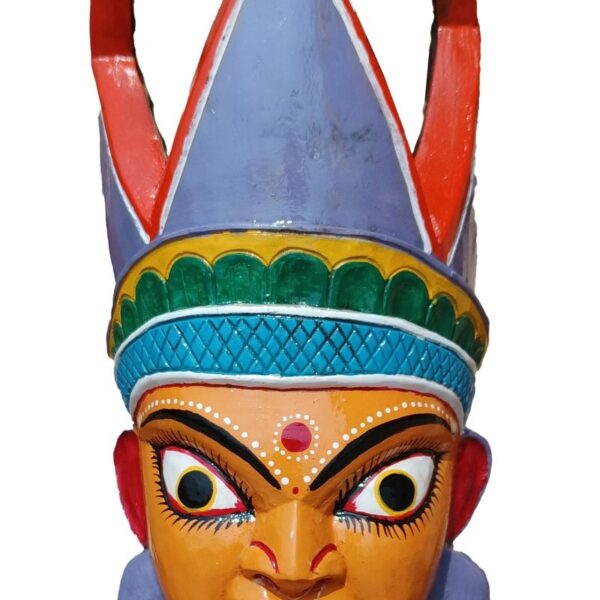
 80.00
Patachitra on Wood. Wooden Toys from Rural Bengal. Tribal art decoratives for your home. Gift to dear ones. Minimum purchase set of 5

Mukha-Dinajpur

 1,500.00
Mukha art of South Dinajpur from West Bengal. The wooden masks is the prime occupation for the locals. Visit the Mukha section and bring home these colorful creations to decorate the walls.

Mirabai

 4,500.00
Mirabai is an immortal character who expressed her devotion to Lord Krishna through her music. This painting of Mirabai belongs to the typical Pata Shilpa gharana of Bengal. The simple yet bold strokes are the signature style of these artists who are the children of the soil. With these paintings, they tell the stories of Mirabai through songs, composed by themselves. This piece is created by Bahadur Chitrakar. 

Tribal Story

 5,500.00
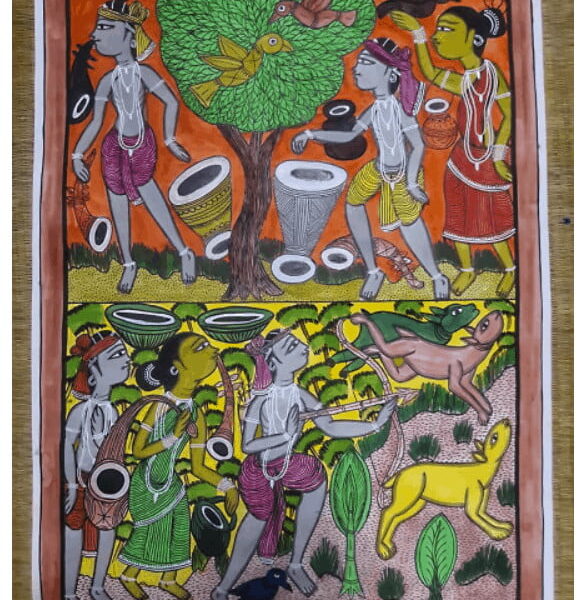
The location of these Patachitra Shilpi or artists falls in a place, popularly known as Jangal Mahal in West Bengal. The area is home to a number of indigenous tribes like Santhals, Vills, Mundas. The paintings, for obvious reasons, depict the tribal culture. One such example by Nazra Chitrakar, who learnt the art from her older generations and is now passing it on to her successors. The painting shows how the tribal youth goes hunting and fishing. Their hunts are always accompanied by Madal (a kind of drum) the beats of which brings the animals and the birds out of their hide outs. 

Kamale Kamini

 5,500.00
A depiction of Kamale Kamini, the Hindu deity called Devi Chandi, is here in this painting of Bahadur Chitrakar. The famous Bengali folk lore, Chandi Mangal, written by Kabikankan Mukundaram, tells the tale of Devi Chandi, supposedly another avatar of Devi Durga. The goddess was seen sitting on a huge lotus flower in the middle of the sea and gobbling an elephant and then throwing it up. She would repeat this time and again. The story is long and this painting was used to tell the story to villagers in olden days. It is a very old piece of art. 

Ganesh Janani

 4,500.00
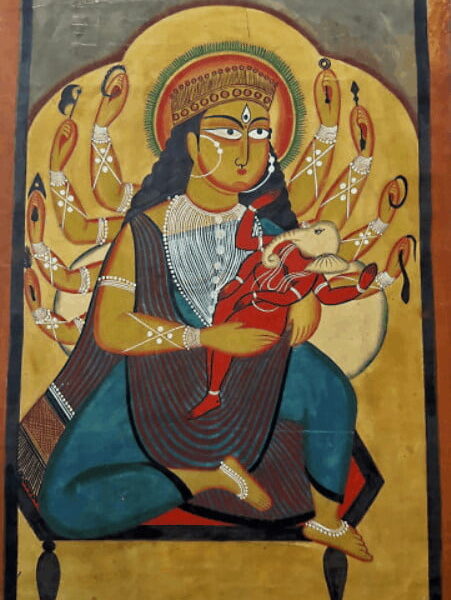
Devi Durga is essentially seen as the super power destroying the asuras; but she is a loving mother too. in this painting we can see that she is holding her son Ganesha in her lap with utmost love, care and fondness. It depicts mothers love in a woman who can be as fierce at times too, to save her children from the evil. This is a very famous concept amongst the Bengalis which narrate the power of woman, who can destroy and who can create and preserve at the same time. A painting by Bahadur Chitrakar 

Manasa Mangal

 5,500.00
This painting, by Bahadur Chitrakar, is a scene from the Manasa Mangal, also known as Padmapuran, a folk lore based on Hindu mythology. The deity of snakes, Devi Manasa is one of the protagonists of the story who compels Chand Saudagar, a rich businessman, to worship her by hook or crook. Chand was a worshipper of Shiva and he would never want to pay homage to Manasa. To fulfil her desire, Manasa sends her snakes to bite Chand’s son Lakhindar to death. Behula, the wife of Lakhindar, takes all the pain to make piece between Manasa and Chand, and subsequently gets back her husband to life.