Recently Viewed Products
Shiva
Lord Shiva has always been a much sought after figure of Patachitra, as these paintings, when done on the back of clay saucers instead of papers, are used in the place of clay idols of deities and are worshipped in the household of many common Bengali people. This is also quite an old piece of art done by Bahadur Chitrakar.
Bengal Handicraft. Wooden Toys. Pair of Owls
Mukha-Dinajpur
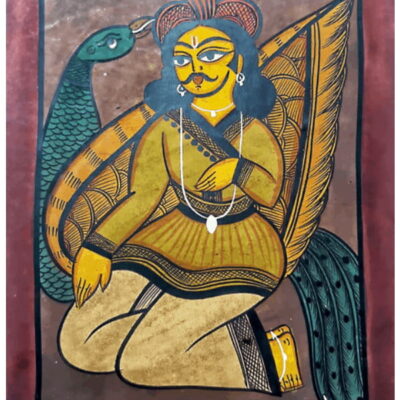
Kartik – Indian God
The Patachitra of Pingla generally depicts the stories of Hindu mythology. In this artwork we can see the Hindu God Kartik with his peacock, done by Suman Chitrakar. The colours used in these artworks are all derived from natural elements; for example green is made from leaves, yellow from turmeric, etc.
Tribal Story
The location of these Patachitra Shilpi or artists falls in a place, popularly known as Jangal Mahal in West Bengal. The area is home to a number of indigenous tribes like Santhals, Vills, Mundas. The paintings, for obvious reasons, depict the tribal culture. One such example by Nazra Chitrakar, who learnt the art from her older generations and is now passing it on to her successors. The artwork showcase a dance performance by the young tribal boys and girls.
Sold Out
Toe Ring
A imitation toe ring is a small, decorative ring, typically made of metal, worn on the toes, most commonly the second toe. They are a popular fashion accessory and can be worn by both men and women, often with barefoot sandals, bare feet, or anklets. Toe rings have a history rooted in tradition, particularly in Indian culture where they are worn by married women as a symbol of their marital status.
British Raj
Art speaks for time. The Pata Maya or Patachitra of Bengal, since time immemorial, has been the testimony of time. Our country served as a colony under the British rule for two hundred years and this painting depicts the socio-economic contrast between the British ruler and his indigenous servant of the then India.
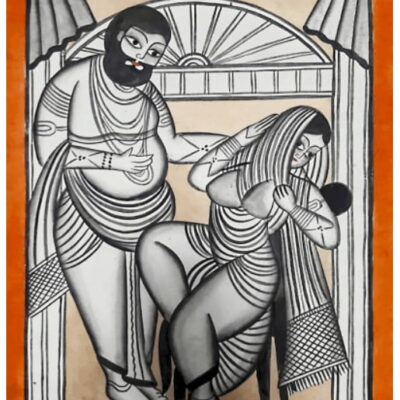
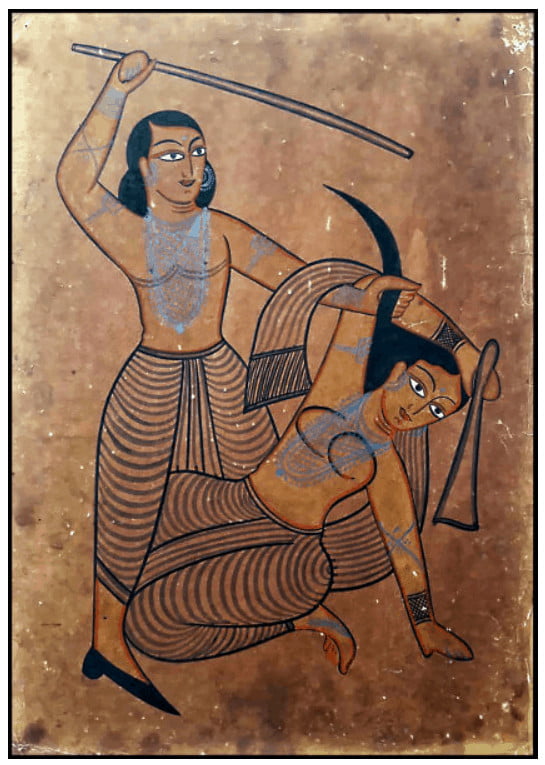
Babu Bibi
A narrative of a regular couple’s life where the Bibi (wife) is sulking and the Babu (man) is trying to get her back in good mood by pampering her. Such stories, back in time of no television, would serve as the source of entertainment to village women. This one is done by Bahadur Chitrakar, who in his youth, would sing along and the audience would sit together in one of the courtyards of the village to listen and enjoy.

Reviews
There are no reviews yet.